What’s on
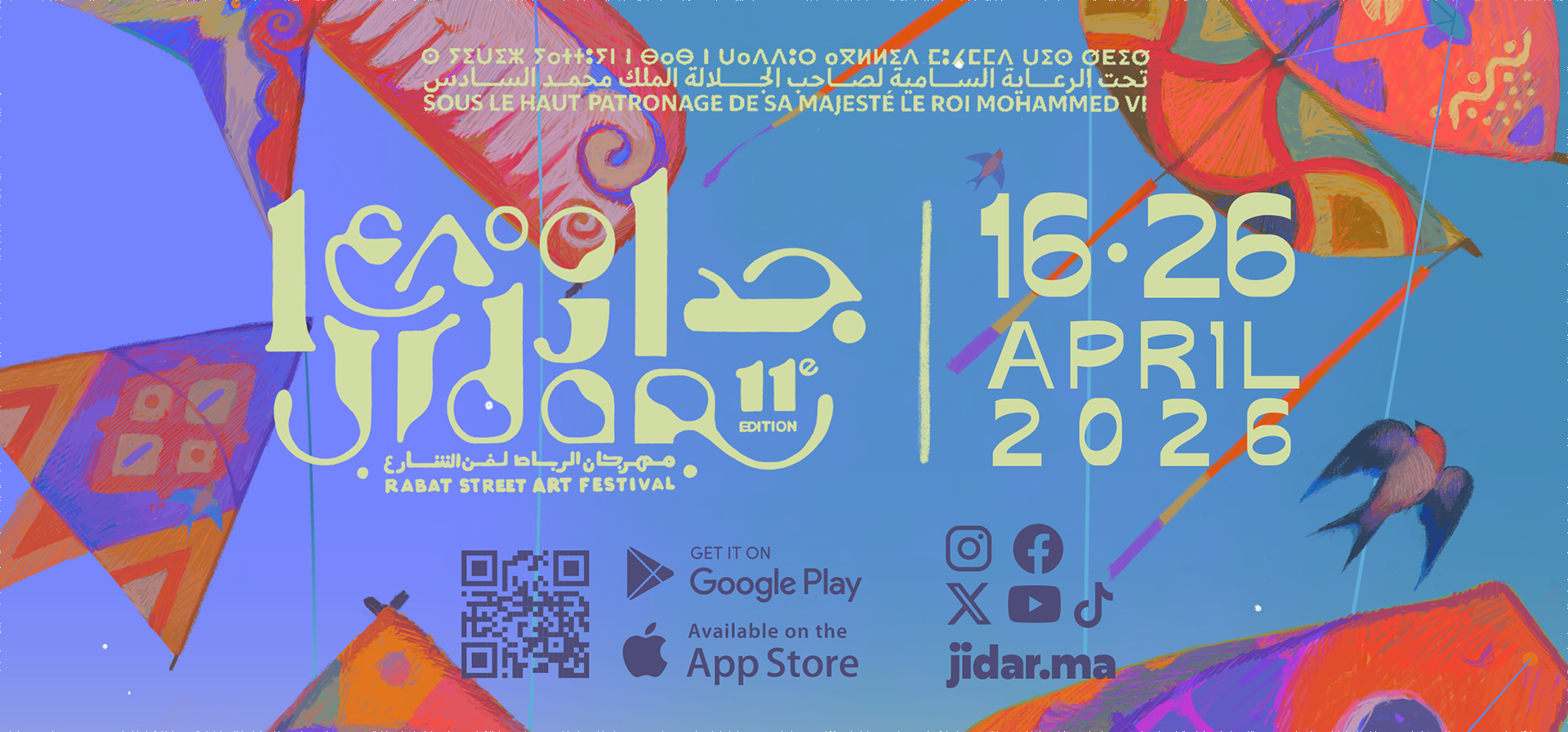
For its 9th edition, the Jidar — Rabat Street Art Festival transformed the Moroccan capital into an open-air museum from 16 to 26 April 2026. For eleven days, a dozen international and Moroccan urban artists painted monumental murals on the walls of the Agdal, Océan, and Médina neighbourhoods. This edition focused on the theme « Memory and Transmission », echoing the celebrations of the city's modern bicentenary.
The festival that redrew Rabat
Launched in 2015 by the EAC-L'Boulvart association, Jidar (which means « wall » in Arabic) has become one of the most anticipated events on Rabat's cultural scene. Every spring, a rigorous selection of around a dozen artists comes to enrich the city's visual heritage. In 2026, more than 200 murals from previous editions remain visible on the streets — a permanent legacy that makes Rabat a reference point for street art in Africa.
The invited artists in 2026
This edition welcomed top names from the global street art scene alongside emerging Moroccan artists. Among the standout names: the Portuguese Vhils (known for his portraits carved into facades), the New York-based Faith XLVII, the German Case Maclaim, and the new generation of Moroccan artists led by Machima and Mouad Aboulhana. Each artist created an in situ work, in dialogue with the architecture and the neighbourhood's residents.
The route of the murals
The festival published an interactive map to follow the circuit of the works during the eleven days and afterwards. The murals are mainly located:
- Agdal — around Al Imam Malik Avenue and Pumonia Street
- Océan — historic European quarter, alleyways around the central market
- Médina — on walls authorised by the wilaya, respecting the heritage fabric
- Hassan — occasional interventions near the Hassan Tower
The official map is downloadable from jidar.ma and remains usable all year round to discover all of Rabat's murals.
The off events
Alongside the murals, Jidar offered a rich parallel programme: live graffiti performances, stencil workshops for children at the Villa des Arts, documentaries on street art in the Arab world, and roundtables with the invited artists. The closing concert gathered over 3,000 spectators on the esplanade of the Mohammed V National Theatre.
Why Jidar matters
Beyond the festival itself, Jidar plays a structuring role for the street art scene in Morocco: it enabled the emergence of around twenty local artists now recognised internationally, and made Rabat a stop on urban and cultural tours. For its 10th edition scheduled for 2027, the organisation has already announced an extension of the programme to the cities of Salé and Témara.
When can you see the murals?
All works created in 2026 are permanent and visible 24/7 from the street. The best time to discover them: early morning (8am–10am) for the light, or late afternoon (5pm–7pm) for the warm colours. Allow half a day to walk through the entire circuit with the official map.