What’s on
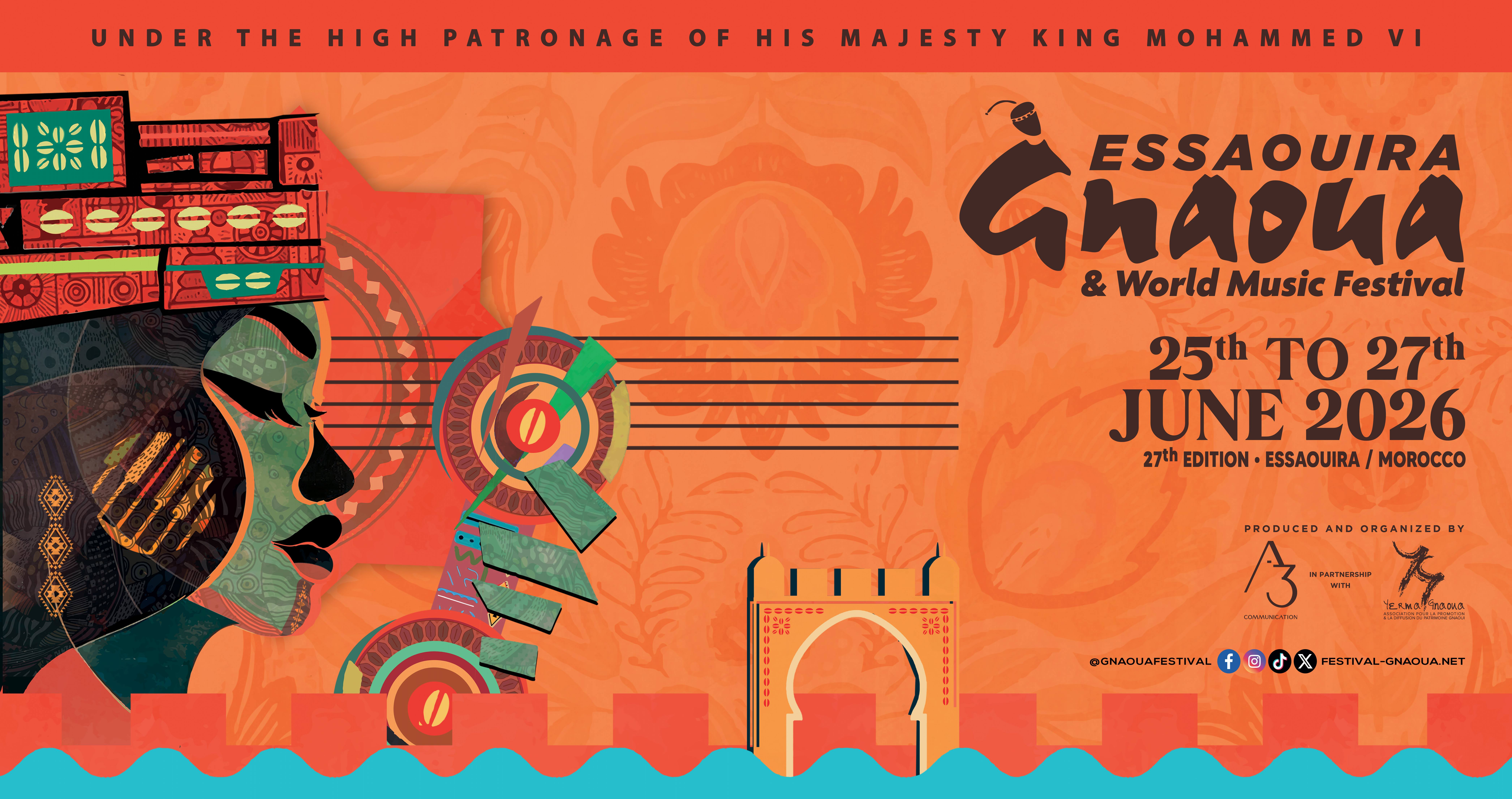
The Essaouira World Music and Gnaoua Festival returns for its 27th edition from June 25 to 27, 2026, transforming the blue city once again into the world capital of mixed music. Three days, ten stages, over fifty concerts, and an average of 500,000 festival-goers: Gnaoua is not just the largest festival in Morocco—it is one of the world's largest free-access music events.
The Gnaoua Spirit
Born in 1998 at the initiative of Neila Tazi to promote the sacred music of the Gnaouas—descendants of sub-Saharan slaves who became a spiritual Moroccan community—the festival is today a laboratory for fusion between world music traditions. The concept of « Trance Fusions », the event's trademark, brings together Gnaoua maâlems, jazz, soul, funk, electro, and folk musicians for collaborations often unique, created specifically for the Essaouira stage.
The 2026 Lineup
The 2026 edition celebrates the 30th anniversary of Essaouira's inscription on the UNESCO World Heritage List. The lineup, revealed in May, highlights:
- Maâlem Hamid El Kasri — the guardian figure of the Gnaoua scene, performing at the opening concert on Moulay Hassan Square
- Maâlem Mahmoud Guinia Junior — heir to a historic dynasty, in fusion with a Norwegian jazz quartet
- Tinariwen — the Tuareg of the Malian desert, a highly anticipated return after their last appearance in 2019
- Cimafunk — the rising star of Afro-Cuban funk, making their first appearance in Morocco
- Songhoy Blues — electrified Malian blues, at Bab Marrakech stage
- A blank check for the new female Gnaoua scene: Asmâa Hamzaoui & Bnat Timbouktou
As every year, several traditional « Hadras » (authentic Gnaoua ceremonies) take place in the medina, with limited access, on reservation through the organization.
The Stages and Locations
The festival unfolds across four main stages and several secondary stages, all free and open to the public:
- Moulay Hassan Square — the iconic stage facing the medina, capacity 60,000 people
- Bab Marrakech — a more intimate stage, ideal for jazz/world fusions
- Borj Bab Marrakech — acoustic concerts in the early evening
- Bay Beach — sunset concerts on Friday and Saturday
For fans seeking a more exclusive experience, the festival offers private paid evenings in partner riads and hotels (limited capacity, mandatory reservation on the official website).
Practicalities: How to Organise
Essaouira goes into festival mode from the preceding Wednesday. A few tips to make the most of it:
- Accommodation — book 3 to 4 months in advance (riads are fully booked by May). Alternative: Marrakech (2h30 drive) with festival shuttles
- Transport — CTM/Supratours buses from Marrakech (~4h, ~80 DH) or Casablanca (~6h, ~140 DH). Car not recommended during the festival: pedestrian centre
- Weather — strong winds (the famous « Alizés » of Essaouira), temperature 18-24°C even in June. Bring a light jacket
- Safety — volunteers and police on standby, peaceful but dense crowds near the main stages
- Food — official festival stands + medina restaurants (reservation recommended for dinner). Our selection: Heure Bleue Palais, La Coupole Essaouira Beach, Océan Vagabond
What Makes Gnaoua Unique
Gnaoua is not just a festival: it is a moment when the entire city of Essaouira vibrates. The blue alleys of the medina echo with improvised percussion, café terraces become discussion lounges between musicians, and fishermen share their grilled sardines with artists coming from New York or Bamako. It is the most vivid embodiment of the « welcoming Morocco ».
For music lovers, it is also one of the few places where you can hear, in the same evening, a maâlem singing ancestral chaabi and a contemporary jazz quartet reinventing that same piece in a fusion created that morning during rehearsal. An experience that can only be lived in Essaouira.
Access and Ticketing
All public concerts are free and ticketless. For private evenings, Hadras, and masterclasses, tickets available on festival-gnaoua.net. Detailed online programme from mid-May 2026.